Blakrose Hand~crafted Wire Art Jewelry & Accessories... |
||
History of Wire Crafted Jewelry ,
Wire sculpted jewelry is an ancient craft that Biblical Scholars have dated back as far as1446 BC. It is known that Egyptian and Phoenician artists practiced that art over 5,000 years ago and pieces of wire jewelry have been found in the pyramids as well as ancient Pharaoh's tombs. It is the only known metal jewelry craft that is created completely without soldering or casting. Soldering or casting is a technique that uses heat by flame or torch to melt the metal together. Creating Wire Jewelry is more of a challenge, as it is held together only by the wires. The wires are twisted, bent and cut, using only the skill of your hands and basic tools of pliers, wire cutters and ruler.
Examples of wire and beaded jewelry made using wire wrapping techniques date back to thousands of years BC. & A.D some examples on left below >>>>>>>>>>>>>>>>>>>>>>>>>>>>>>>>>>>>
The British Museum has samples of jewelry from the Sumerian Dynasty, found in the cemetery of Ur that contain spiraled wire components. This jewelry is dated at approximately 2000 BC. Other samples of jewelry from Ancient Rome show wire wrapped loops (one of the important techniques in making wire wrapped jewelry). This Roman jewelry is dated to approximately 2000 years ago.
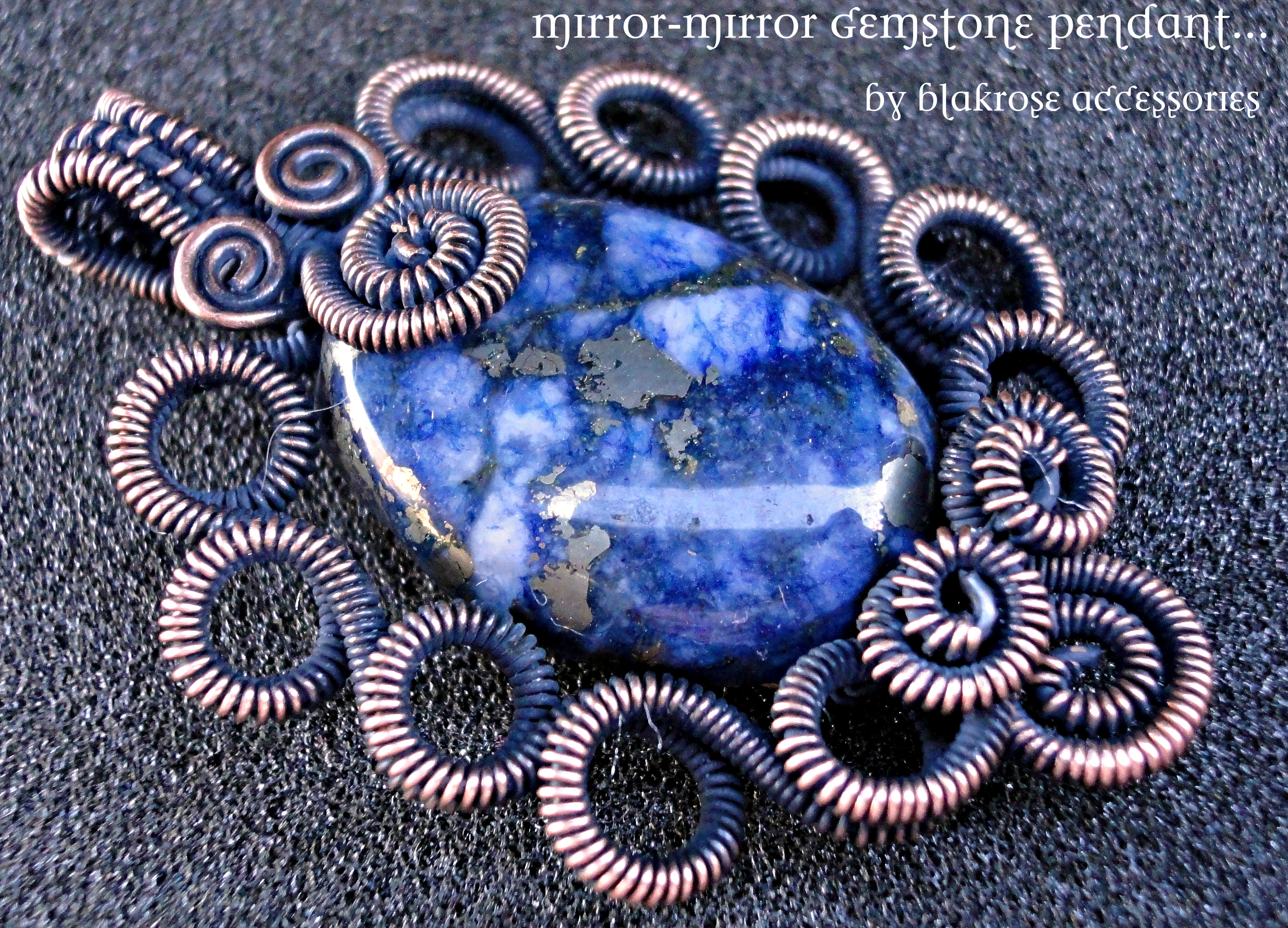
In the manufacture of this early jewelry the techniques for soldering did not exist. Later, as the technique for soldering developed, the wire wrapping approach continued because it was an economical and quick way to make jewelry components out of wire. Currently, wire wrapping techniques are not frequently used for mass produced jewelry because of simple economics. Machines can cast jewelry components much faster and cheaper. Artisans or craftsmen are required to make jewelry by hand and in the current mass marketplace, machines are less expensive and perhaps more precise. Having said this, to the right is a photo of a hand~crafted pendant holding 7 stones on just one side!, This is very prisice and no machine in the world can achieve this type of work! At this time, using the wire wrapping approach to making jewelry is primarily employed by individual craftsmen and women.
The wire used in designing jewelry may be from many different alloys such as gold, sterling silver, brass, and copper. Its strength can be soft, medium, or hard. Hard wire is used mostly in making bracelets, while soft wire is used in sculpting designs and allows the wire to be twisted more easily. Prolific jewelry making began with the ancestors of Homo Sapiens, the Cro-Magnons over 40,000 years ago when they began to migrate from the Middle East to Europe.
Cro-Magnons eventually replaced the Neanderthals as the dominant species. Jewelry from that period and that of native cultures at the time, includes crudely fashioned necklaces and bracelets made of bone, teeth, mother-of-pearl, shells and stone strung together with a piece of twine or animal sinew.
The earliest signs of metallurgy, using copper to make jewelry, was seen around 7,000 years ago. The wire was woven into a basket of filigree and set into the breastplate. Later in Exodus, more detailed instructions were given about setting other gemstones into the rest of the priestly garments. Biblical scholars have placed this event near 1446 BC, nearly 1000 years ahead of the Phoenicians. By 300 BC the Greeks were making multi coloured jewellery and used emeralds, garnets, amethysts and pearls.Eight centuries BC the Italian Etruscans in the Tuscany region produced granulated textured gold work. They made large clasps, necklaces, bracelets and earrings. They also made pendants that were hollow and could be filled with perfume. But one coveted centerpiece for the wrist and neckline of virtually every temptress from Helen of Troy and Cleopatra to today’s most popular fashion queens is the precious gem, one of natures finest own creations that have been even further perfected by the modern technologies of man. While clothing styles and fashion have changed with time, jewelry is the one and only ornamental element that has survived through out the centuries. |
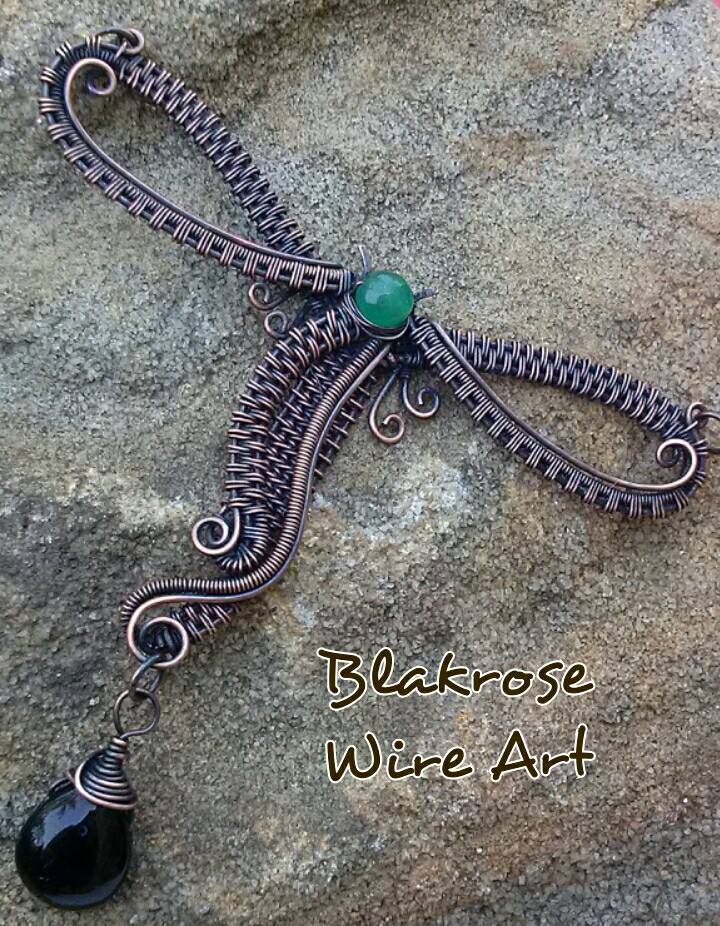
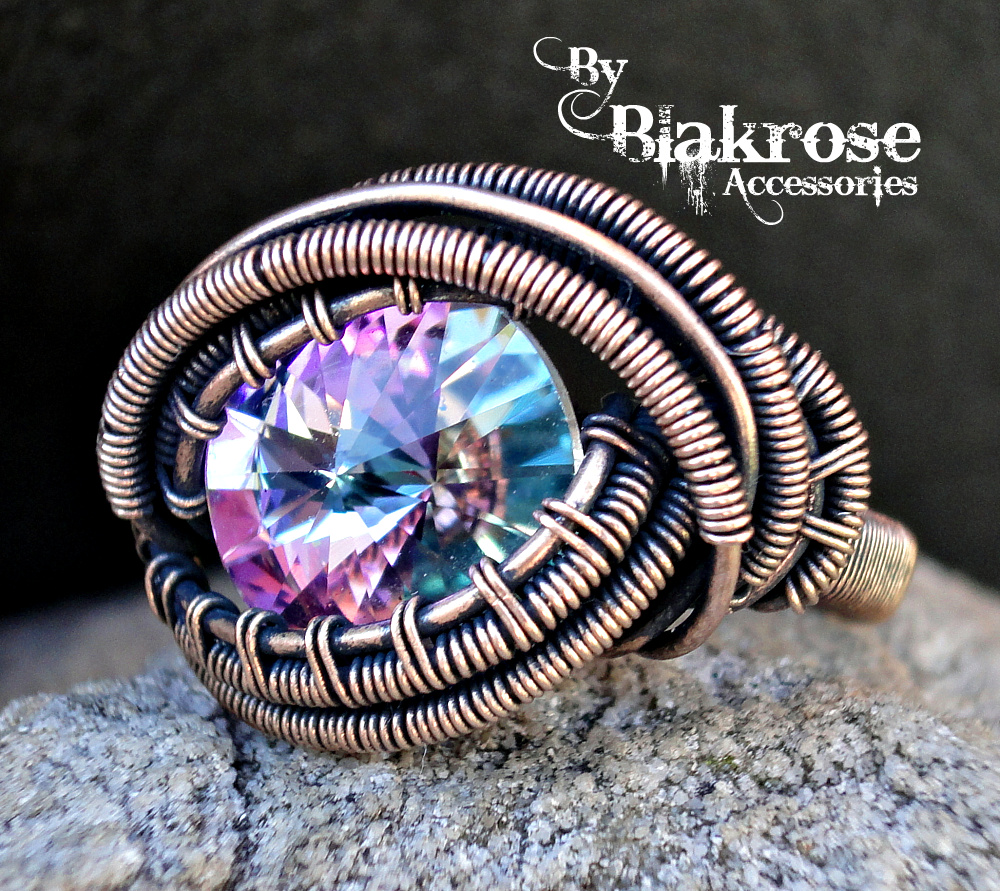
This is a 2 tone solid brass & copper neckcollar , featuring a swarovski teardrop pendant, Made by Amanda Rose @ Blakrose Accessories. This is a solid red brass wire woven ring featuring a Swarovski crystal sew on rivoli in heliotrope 12mm, Known as the vikings princess woven ring, Made by Amanda Rose @ Blakrose Accessories This gorgeous spirit ring was handcrafted by myself Amanda rose, To hand craft this sexy ring, Iused solid copper and solid red brass wire, also feauturing 1 x celedon Swarovski crystal rivoli 14mm All photo's & information below Including dating, curtousy of the Indiana University Art Museum, 1995, cat. #63B ![]() (Above)
ROMAN GOLD BRACELET ![]() (ABOVE) ROMAN GARNET AND GOLD RING
personally, i use only SOLID brass, copper, bronze, a little sterling and argentium silver!, but i find alot of people have allergies & dermitological problems with sterling and gold filled!, I mmy self have VERY sensitive skin but i can wear brass abd copper everday, in the shower doing the dishes and im fine no rash no tarnish!, thats why my customers love it too, Infact the more modern name for brass is actualy "NU-GOLD", because even those whom are sensitive or even allergic to gold and gold filled can wear brass no problems! The difference in solid natural copper and brass to plated is its natural from the earth, where-as plated has a mixture of nikel and othe filler metals that react thus making your skin grenn and itchy..... yukie and ouchie...lol,
To see more modern and exquisite pieces just take a tour of my site.... enjoy and feel free to ask any questions, im always happy to help :) Below we have a beautiful vintage reproduction made by my dear friend and highly respected wire artist of more than 20 yrs bobbi maw, from the lovely florida USA! More of her stunningly exquisite work can be veiwd here ; http://www.etsy.com/people/MyWiredImagination ![]() Modern day wire-wrapping in England and America can probably be attributed to an enterprising artist named Mr. C.G. Oxley. Employing First World War vets as a form of occupational therapy, Mr. Oxley created a widely popular line of jewelry using mainly glass beads and plain wire designs during the 20’s and 30’s. A young man named Jim Llewellyn had taken an interest in wire working when Oxley’s was in full swing. He used to buy his wire from Oxley’s, and could remember the huge workshop with a long U-shaped bench that stretched the length of the room. Twenty to thirty men sat along this bench busy wire working. Sadly, as that generation of wire-workers grew older and died, No new ones stepped up to take over, and Oxley’s closed its doors in the mid-80’s. Wire-wrapped jewelry is mostly unheard of in England today; but Jim and Mavis Llewellyn emigrated to Canada, bringing with them Jim’s hobby – wire-wrapping. Today, we have an almost endless list of resources for wire art; modern wire artists combine gemstones, beads, antiques, family heirlooms and even mineral specimens with gold, silver, and gold fill wire. Other artists also use copper, jeweler’s brass and german silver in their designs. |
|